
Robert Cotton’s visit to Kwasa 2026
The first thing I noticed, on arriving at Kwasa grounds, was that the grass had been carefully mown throughout the property (Site 1 and 2). Gone are the days with scrubland, waste heaps and bushes (that we were told sometimes hide snakes). The whole area within the school fence looks so smart. As do the students. On Monday morning, only five weeks into the new school year, I watched them arrive – all the primary children, neat in uniforms, with the pre-primary running along enthusiastically. An experienced head teacher once told me that you can make a first judgement about a school by watching the energy levels as children arrive, then leave at the end of the day. These students were keen to arrive at Kwasa – and were buzzing as they departed home at the end of the day. (Playground)
There are currently over 500 children on site. In two years’ time, one form will be added to each of Grade 6 and 7, making about 600 children, with two-form-entry throughout the age range (from 3 to 11). That will see the completion of this visionary undertaking: to create a top-quality Primary School, with early year provision, catering largely for families living in the nearby informal settlement. Remember: this informal settlement is on the outskirts of a settlement, just outside Springs a town outside Johannesburg – a place which politicians and others can so easily forget. I can still remember the early days when the school was housed in some old mineworkers’ cottages and a few converted containers. Now, there is a safe, attractive environment, well provisioned with play equipment and outdoor creative spaces, all of which promote a range of health-enhancing, tactile, stimulating education (Equipment). I am describing the site, as I saw it – not because it is more important than the students and staff; but because a good site is crucial for promoting good education. There is a fascinating page on the Kwasa College website, describing how important the environment is for learning: https://kwasacollege.org/our-impact (At play)
But then, changes are visible in the staff as well. Benita is now the head of Primary phase, with Sonja remaining head of Pre-Primary. In that team, there is a determination to improve, combined with a sensitive approach to each individual child, whose home circumstances may be tough, unreliable, challenging and random. Most of the teachers and classroom assistants seem (to my eye) to be in their 20s, 30s, or (possibly) 40s – that is young! The Intern Scheme is starting to run well. 3 or 4 interns are selected each year, given bursaries to cover the fees of their final year of a BA or professional qualification, and then expected to remain teaching at Kwasa for a while thereafter (I hope I have those details right). This means that there is a steady input of young teachers, with fresh ideas. I met Cindy (Cindy) who completed the Intern scheme last year and is now a full-time teacher in the Pre-Primary. She is enthusiastic, loves being at Kwasa and is evidently doing well. My favourite anecdote from her: all her children arrive at Kwasa not knowing a word of English – by the end of the year, they are all fluent. And Cindy achieves this without a classroom assistant who can speak Zulu or another of the South African languages. There is a lot of pointing, miming and visual teaching/learning – and 9 months later, they can speak English!
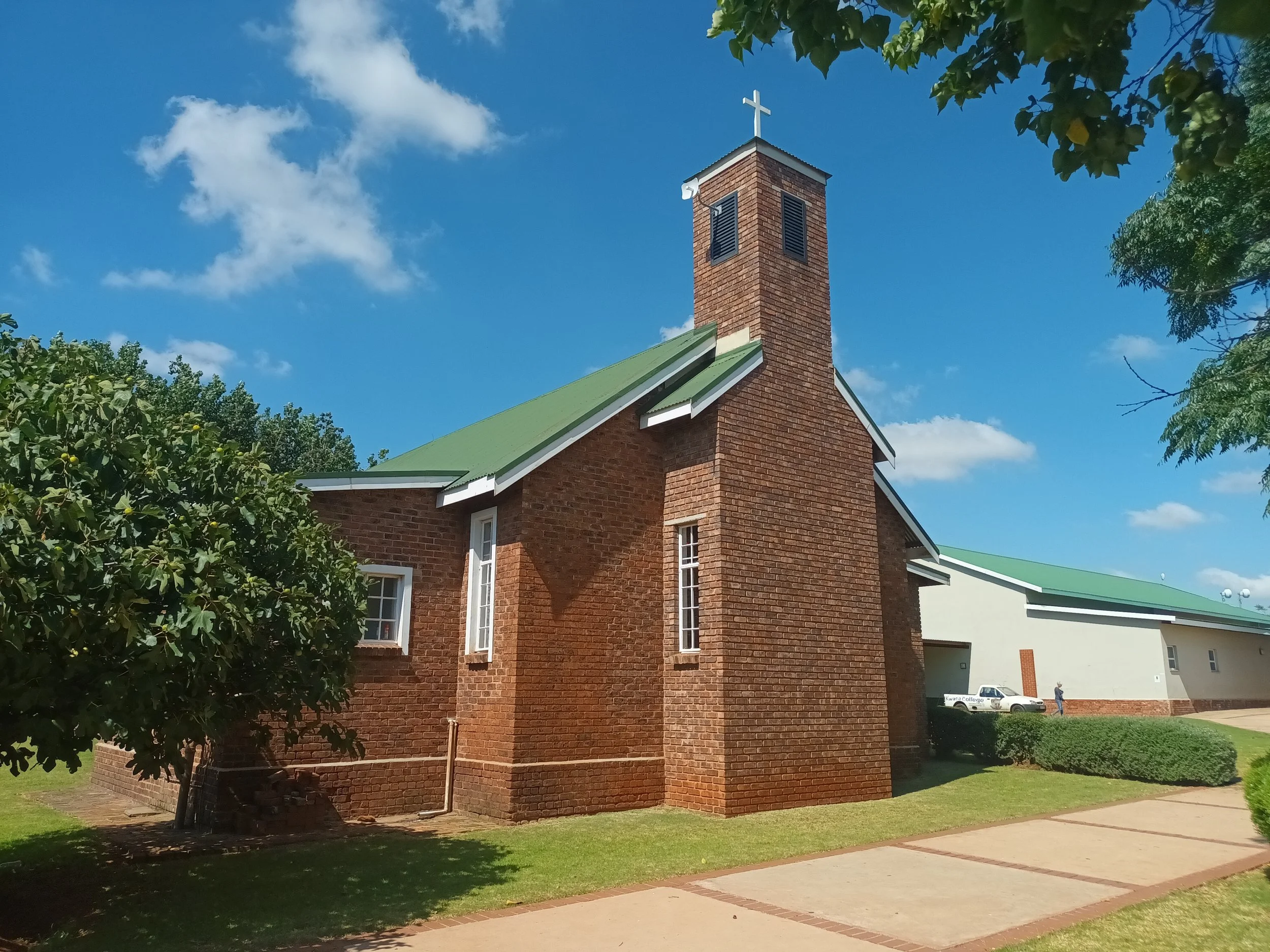
Chapel
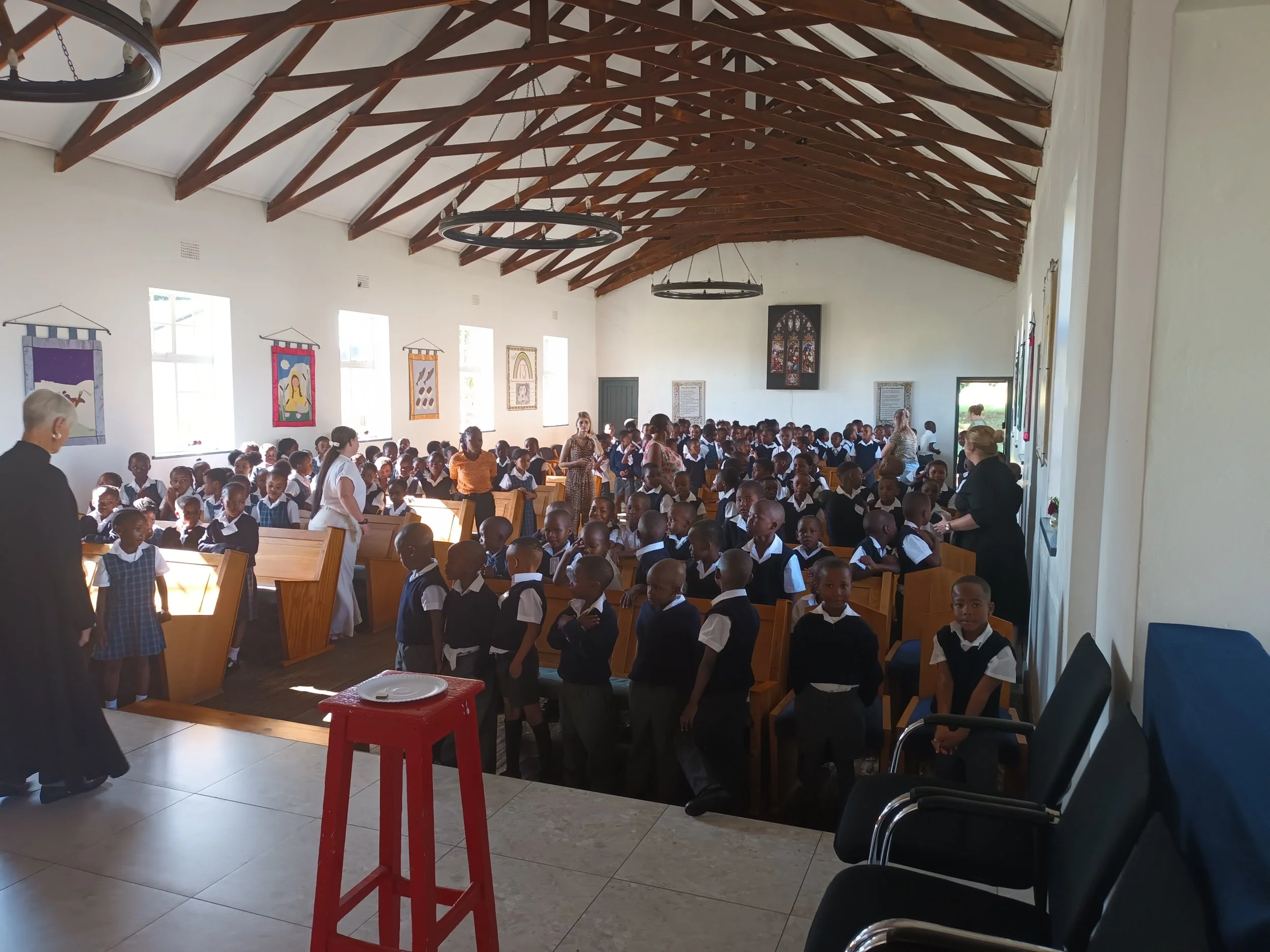
Assembly
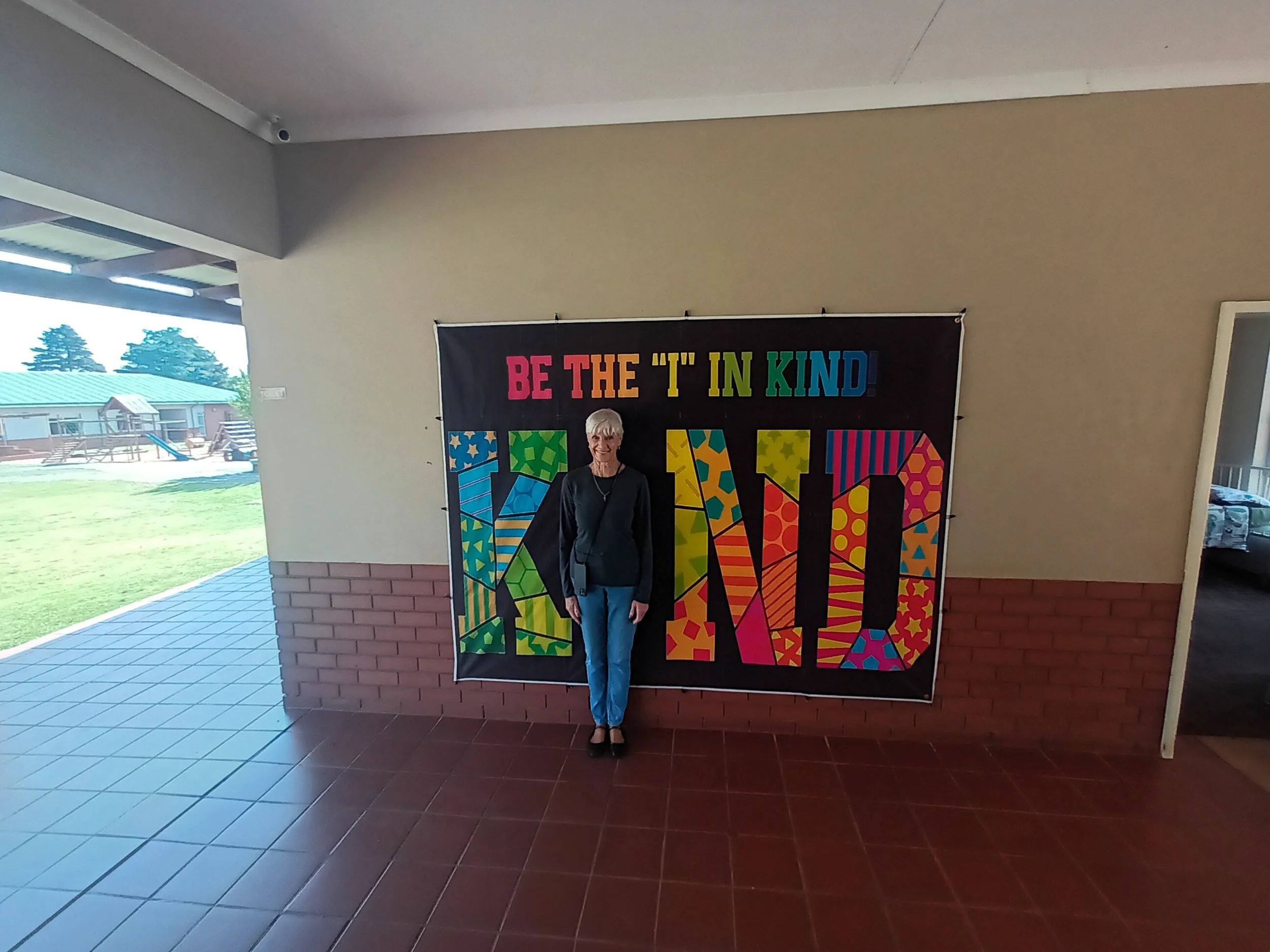
Kind
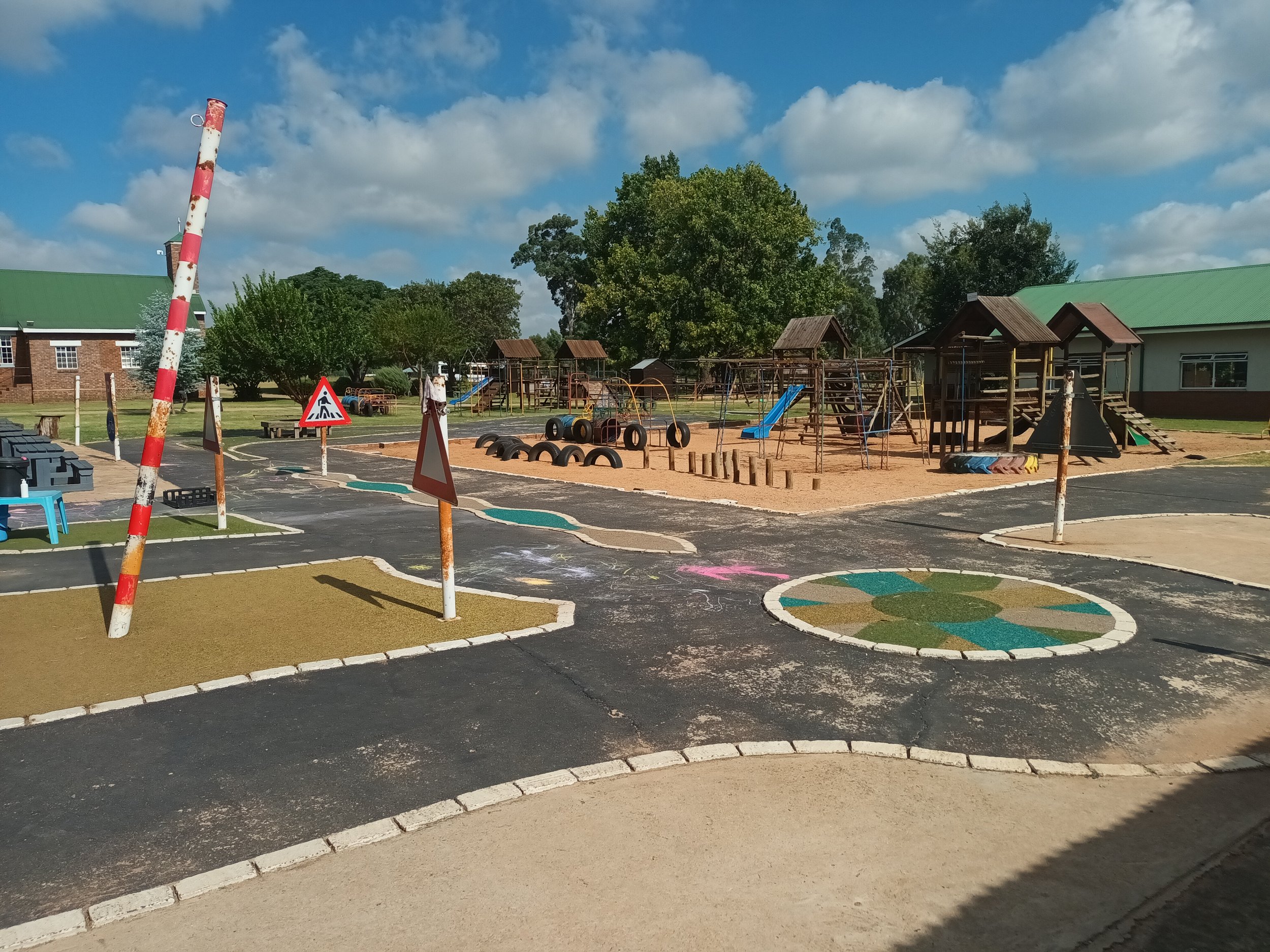
Playground
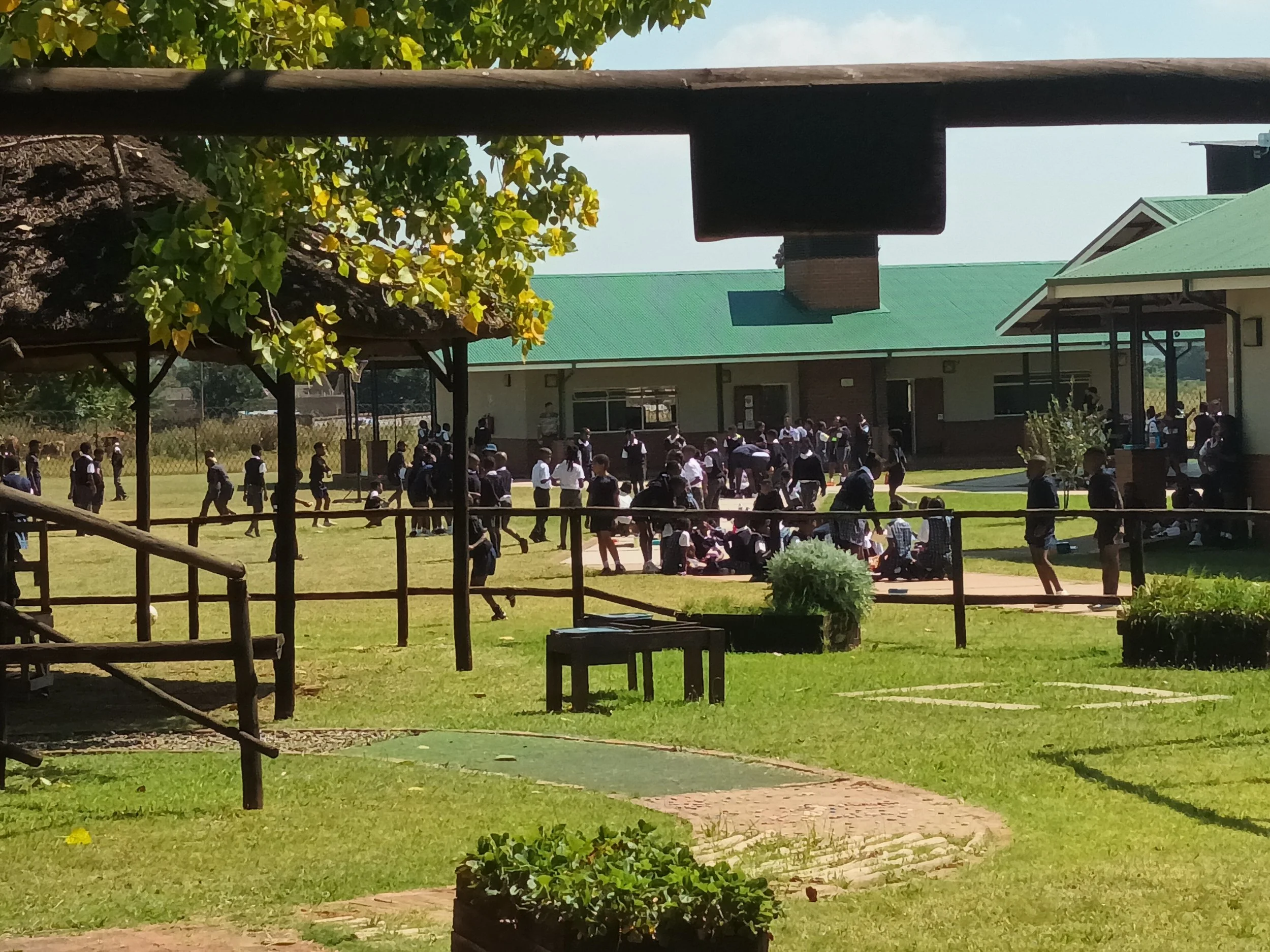
At Play
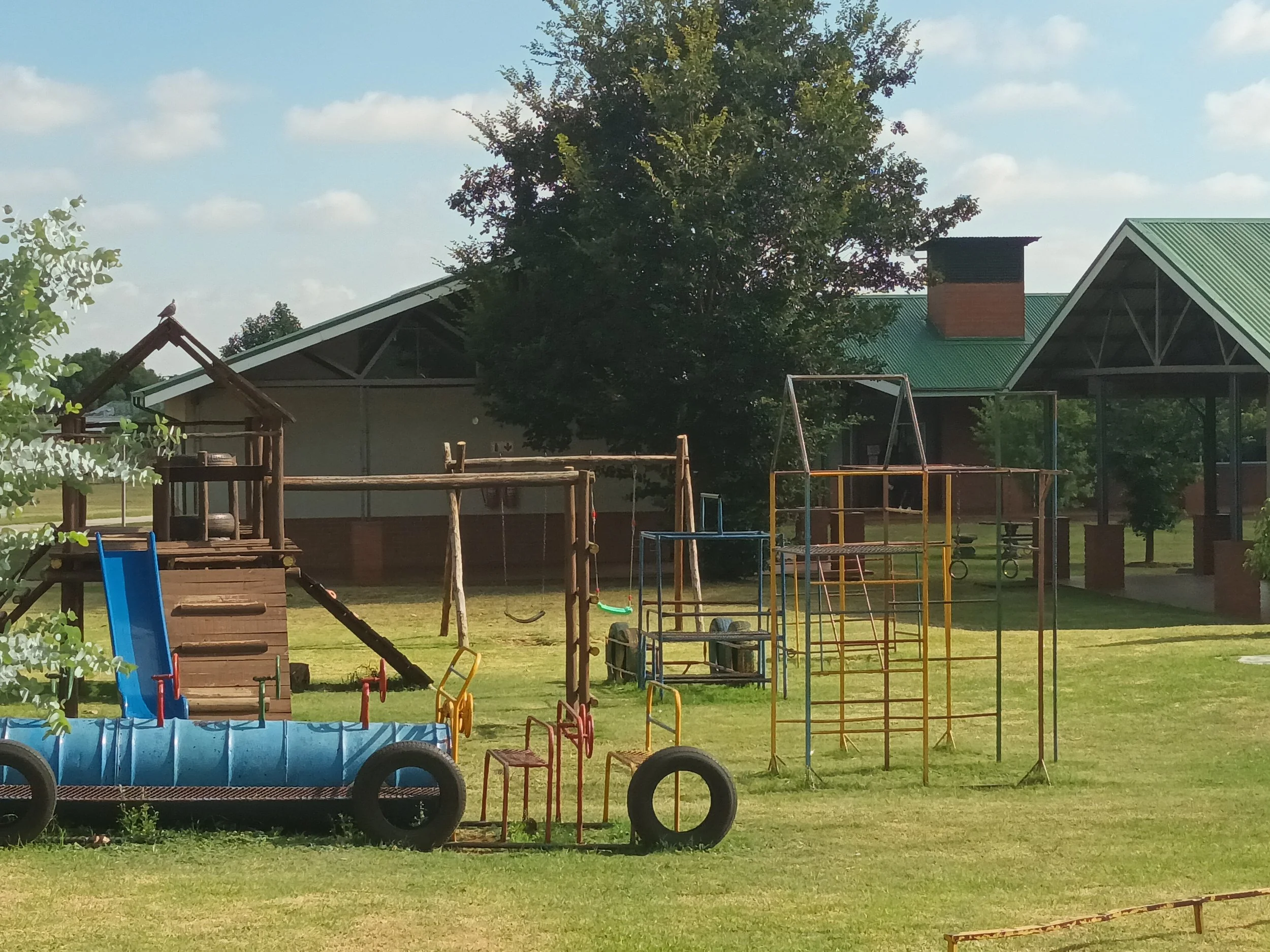
Equipment
Unsurprisingly, (Assembly) there was a school assembly for Grades 1 to 3 on Monday morning, at which I was invited to speak (fortunately, I was given warning about this). I reprised an assembly I had invented 10 years ago in Guildford – the Parable of the Talents, except performed with pieces of a Cadbury’s Milk chocolate bar. It went down well, of course. All the children (some of them being only 3 years old, in the first few weeks of schooling) were attentive, well behaved, and joined in as much of the singing as they had so far learned.
Some challenges remain constant and familiar: many families need assistance with school fees. There was a break-in on Christmas Day – through the roof of what was once the IT suite (but, fortunately, this has been moved to a more secure room, though the would-be thieves did not know that). There is a tricky relationship with some local neighbours, who live on Kwasa land, but pay not rent. The relationship with the Diocese of the Highveld is awkward: the Board of Social Responsibility no longer exists. The diocese cannot work out whether it wants fully to acknowledge Kwasa as a “Diocesan School” (and thereby take on some responsibilities) or keep itself at arms-length (cheaper, but less prestige for the diocese). Sharron and the Board of Trustees continue to navigate these with sensitivity – as well as dealing with the local Department of Education which seldom seems to deliver fully on its promises of funding.
The Chapel (Chapel) at Kwasa holds a Sunday Eucharist, once a fortnight – with Sharron leading worship at Delmas, a nearby town, on the alternate Sundays. The two congregations came together for my visit, being about 50 in number. There were familiar faces from St Peter and St Paul’s Springs (where Sharron was previously Rector), as well as Carol Beetge, the widow of the first Bishop of the Highveld. It was very moving to be with them – not a moment for nostalgia, remembering times past; rather, this is a lively group, keen to support each other, faithful in worship as in daily living, finding a place to honour God and each other, when difficulties in the diocese and elsewhere make that hard to find.
Closing reflections: Kwasa’s ‘today’ matters. The children here today will receive a good quality education. Many of them go on to good high schools nearby; some achieve medals in local educational or sporting events. When a context is unstable and challenges abound, I find it hard to focus on the value of simply doing well today. Kwasa, on the other hand, does that – and continues to do that. “God created Kwasa, and saw that it is good” (to paraphrase Genesis 1). Kwasa also has a future that is worthy of support. The next two years are reasonably well mapped out. After that, who knows? To create a school that is sustainable, and barring any major disaster, will thrive for years to come is a massive achievement. I look forward to the day when there are two or three alumni of Kwasa College sitting on their Board of Trustees. Some of the Kwasa children that I first met more than 10 years ago have now completed their university education and are embarking on their professional lives. Won’t it be wonderful when they have the time and resources to take the school forward into the next generation? I am privileged to have seen Kwasa over nearly 20 years; so I can discern its past too. I remember donors, supporters, visitors and those who have prayed. Their gifts and spirit of generosity live on. On the first visit of a youth party from Holy Trinity and St Mary’s Guildford, Amelia Vlach painted a lion on the outside wall of the toilet block. It’s still there, slightly faded but no less majestic. Walking the site, other memories surface – slightly faded, yet I know that the present and future of this place is certainly majestic.
At the entrance of the Pre-Primary school, there is a banner – with one letter missing. It says “Be the I in K*ND”. (Kind) You are meant to stand in front of this banner – place yourself in the picture – and be part of the on-going life of a “little piece of heaven”.